
Foreign direct investment (FDI) serves as a key driver in the global economy, shaping the strategies of countries and businesses alike. By enabling capital flow across borders, FDI not only boosts economic growth but also fosters innovation and technological advancement. Understanding its nuances can provide valuable insights into international markets and investment opportunities.
This article delves into the intricacies of FDI, examining its types, significance, and the impact it has on business innovation, international trade, and economic policies. From small businesses to multinational corporations, FDI plays a pivotal role in shaping industries and driving competitive advantages in various sectors.
Understanding Foreign Direct Investment (FDI)
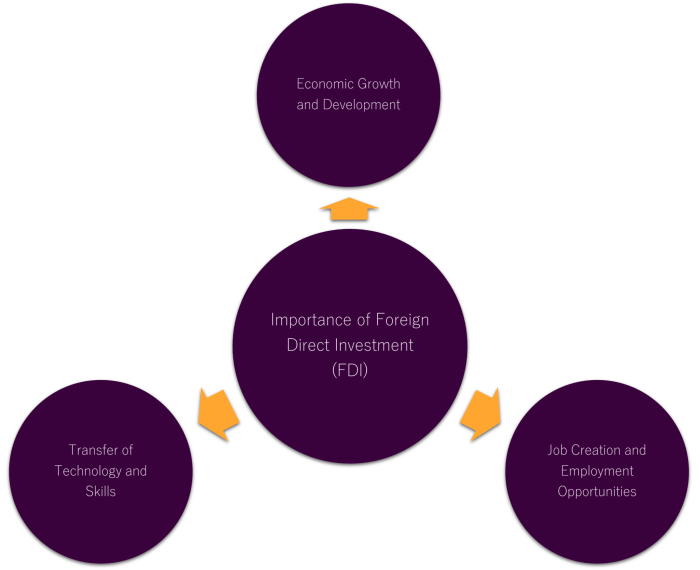
Foreign Direct Investment (FDI) is a significant component of the global economy, representing the cross-border investments made by individuals or companies in foreign businesses. It involves not just the transfer of capital but also the establishment of operations or acquisition of assets in another country, allowing investors to have a substantial degree of influence over the foreign company. Understanding FDI is crucial for grasping its role in enhancing economic growth, job creation, and technological advancement across nations.FDI plays a pivotal role in the global economic landscape by facilitating the movement of capital and resources across borders.
Countries that attract FDI often experience increased economic activity, improved infrastructure, and enhanced human capital through knowledge transfer and innovation. There are different types of FDI, including greenfield investments, where new facilities are built from the ground up, and mergers and acquisitions, where companies purchase existing businesses. Each type has unique characteristics and implications for both the investing and host countries.
Types of FDI
The classification of FDI can be broken down into several categories:
- Greenfield Investments: This involves the establishment of new operations in a foreign country from scratch, including the construction of factories and office spaces.
- Mergers and Acquisitions: This type involves buying existing businesses or merging with local companies to gain immediate market access.
- Joint Ventures: In this scenario, two or more firms from different countries collaborate to create a new business entity, sharing resources and risks.
- Horizontal FDI: This occurs when a company invests in a foreign business that operates in the same industry as its home country.
- Vertical FDI: This type involves investment in a supply chain, either by investing in a company that supplies raw materials or in one that distributes the final product.
Impact of FDI on Business Innovation
FDI significantly enhances business innovation in host countries by introducing new technologies, practices, and ideas that can lead to improved efficiency and productivity. When foreign companies invest in local markets, they often bring along advanced technologies and innovative processes that can transform local industries. This infusion of knowledge not only benefits the foreign investor but also stimulates local businesses to innovate and improve their offerings.Successful examples of innovative projects funded by FDI include the establishment of technology parks in developing nations, where multinational corporations collaborate with local firms and governments to foster research and development.
Such initiatives have led to breakthroughs in sectors like renewable energy, biotechnology, and information technology, showcasing the symbiotic relationship between FDI and innovation.
Relationship Between FDI and Technological Advancement
The relationship between FDI and technological advancement is profound. As foreign companies invest in local operations, they frequently bring cutting-edge technologies that can revolutionize existing practices.
- Foreign investors often provide training and development for local employees, elevating the overall skill level in the workforce.
- Technology transfer occurs, where local firms gain access to new tools and techniques that enhance productivity.
- Local businesses are often encouraged to adopt innovative practices that benefit from foreign expertise and global best practices.
FDI in International Business
FDI serves as a crucial driver of international trade, as it facilitates cross-border transactions and the exchange of goods and services. The presence of foreign firms in a host country often leads to increased export capabilities, as these companies tend to access global markets through their established networks. When analyzing FDI trends, it’s evident that certain regions are more attractive to investors due to various factors such as political stability, economic growth potential, and regulatory environments.
For instance, Southeast Asia has witnessed a surge in FDI due to its rapidly growing consumer markets and favorable investment climates.
Comparative Analysis of FDI Trends
A comparative analysis across several regions can reveal crucial insights about FDI dynamics:
| Region | FDI Inflows (2022) | Main Sectors |
|---|---|---|
| North America | $250 billion | Technology, Finance |
| Europe | $300 billion | Manufacturing, Services |
| Asia-Pacific | $400 billion | Real Estate, Telecommunications |
| Africa | $50 billion | Agriculture, Mining |
Regulatory Frameworks Affecting FDI
The regulatory environment plays a critical role in shaping FDI inflows. Each country has its own set of laws and regulations that can either facilitate or hinder foreign investments.
- Countries with stable political environments and favorable tax regimes tend to attract more FDI.
- Conversely, nations with stringent regulations or high barriers to entry may deter foreign investors.
- Several international agreements and treaties also influence FDI by providing protections and incentives for investors.
Business Management Strategies for FDI
Managing foreign investments effectively requires a robust strategy that addresses the unique challenges of operating in diverse environments. Companies must navigate cultural differences, legal regulations, and market dynamics to optimize their investments.Key strategies for managing foreign investments include conducting thorough market research, understanding local consumer behavior, and establishing strong relationships with local stakeholders. Companies must also develop flexible operational strategies that can adapt to the changing landscape of international business.
Challenges Faced by Managers in FDI
Managers involved in FDI often encounter various challenges that require careful consideration.
- Cultural Differences: Understanding and adapting to local customs and business practices is crucial for success.
- Regulatory Compliance: Navigating the legal landscape in a foreign market can be complex and time-consuming.
- Risk Management: Identifying and mitigating risks associated with political, economic, and operational factors is essential.
Step-by-Step Guide to Formulating an FDI Management Plan
Creating a comprehensive FDI management plan involves several key steps:
- Conduct market analysis to identify potential opportunities and threats.
- Define clear objectives and goals for the investment.
- Establish a governance structure to oversee the investment.
- Develop a risk assessment and mitigation strategy.
- Create an operational plan that Artikels resource allocation and timelines.
Marketing Direct and FDI
The relationship between FDI and marketing strategies is crucial for businesses seeking to establish a foothold in foreign markets. When a company invests in a new region, it often needs to adapt its marketing approach to resonate with local consumers. This includes understanding cultural nuances, preferences, and purchasing behavior, which can significantly influence the effectiveness of marketing campaigns. Successful marketing initiatives backed by FDI often leverage local insights to create targeted strategies that enhance brand visibility and customer engagement.
Case Studies of Successful Marketing Initiatives
Several case studies highlight the impact of FDI on marketing strategies:
- McDonald’s: The global fast-food chain modifies its menu items in international markets based on local tastes, ensuring resonance with diverse consumer bases.
- Coca-Cola: The company employs localized marketing campaigns to engage with communities, often collaborating with local artists and influencers.
- Unilever: Focuses on sustainability in its marketing approach, promoting socially responsible practices that appeal to environmentally conscious consumers.
Role of Branding in Attracting Foreign Investors
Branding plays a pivotal role in attracting foreign investment. A strong brand can convey trust and reliability, enhancing a company’s appeal to potential investors.
- Effective branding communicates a company’s values, mission, and vision to stakeholders.
- A well-established brand can help mitigate perceived risks associated with investing in foreign markets.
- Successful branding strategies often incorporate local elements to foster a sense of connection with the target audience.
FDI and Business Networking
Networking is essential for businesses seeking foreign investments. Establishing connections with potential investors, local partners, and industry stakeholders can open doors to new opportunities and collaborations. Effective networking strategies can significantly enhance the chances of securing FDI, as personal connections often foster trust and credibility. Attending industry conferences, participating in trade shows, and leveraging professional networks are vital for building relationships in the global marketplace.
Effective Networking Strategies
Here are some effective networking strategies to connect with potential foreign investors:
- Participate in local business associations and chambers of commerce to meet influential stakeholders.
- Engage with industry-specific events and conferences to showcase your company’s offerings.
- Utilize social media platforms to connect with potential investors and share relevant content.
Examples of Successful Partnerships Formed Through Networking
Networking has led to numerous successful partnerships, exemplifying how relationships can translate into tangible business outcomes.
- Collaborative Ventures: Many startups have secured investments from venture capitalists through targeted networking initiatives.
- Joint Research Projects: Companies often form alliances with academic institutions to drive innovation and secure funding.
- Supplier Relationships: Businesses have successfully connected with foreign suppliers via networking events, enhancing their supply chains.
Role of FDI in Business Outsourcing
FDI significantly impacts outsourcing decisions for companies, as it allows for cost-effective operations and access to specialized skills in foreign markets. Many firms choose to outsource certain functions to take advantage of lower labor costs and superior expertise available in other countries.Outsourcing through FDI can enhance a company’s competitiveness by allowing it to focus on core activities while leveraging the capabilities of local partners.
This strategy is particularly prevalent in industries such as manufacturing, IT services, and customer support.
Cost-Benefit Analysis of Outsourcing via FDI
Conducting a cost-benefit analysis is crucial for companies considering outsourcing via FDI.
- Cost savings can be realized through lower labor rates in host countries.
- Access to advanced technologies and expertise can improve operational efficiency.
- However, companies must also consider risks such as quality control and supply chain disruptions.
Sectors Most Influenced by Outsourced FDI
Several sectors experience significant influence from outsourced FDI:
- Manufacturing: Many companies outsource production to countries with lower labor costs to maximize profit margins.
- Information Technology: Firms often establish software development centers in countries known for technical expertise.
- Customer Service: Outsourcing call centers to countries with multilingual capabilities enhances customer engagement.
FDI and Workplace Communication
The implications of FDI on workplace communication practices are profound, particularly within multinational teams. Companies must navigate language barriers, cultural differences, and varying communication styles to ensure effective collaboration.Fostering open communication channels can enhance team dynamics and improve overall productivity. Companies can implement training programs to promote cultural awareness and effective communication strategies among their diverse workforce.
Cultural Considerations in Communication
Understanding cultural differences is vital for successful communication in multinational teams.
- Different cultures may have varying approaches to hierarchy and decision-making processes, affecting communication flow.
- Language proficiency can impact how messages are conveyed and understood, necessitating clear and concise communication.
- Non-verbal cues can vary significantly across cultures, requiring sensitivity and adaptability in communication styles.
Tips for Enhancing Communication Among Diverse Teams
To improve communication among diverse teams, companies can adopt several strategies:
- Encourage cultural exchange activities to foster understanding among team members.
- Implement communication tools that cater to diverse language needs.
- Promote an open-door policy that encourages team members to voice concerns and suggestions.
Risk Management in FDI
Investing abroad carries inherent risks that companies must address in their FDI strategies. Identifying these risks is the first step in developing effective mitigation strategies.Key risks associated with foreign investments include political instability, currency fluctuations, and cultural misunderstandings. Companies must proactively assess these risks to safeguard their investments and ensure successful operations in foreign markets.
Risk Mitigation Strategies for Companies Investing Abroad
Developing a comprehensive risk management plan is essential for companies engaging in FDI.
- Conduct thorough political and economic risk assessments before entering a new market.
- Establish contingency plans to address potential disruptions in operations.
- Diversify investments across multiple regions to spread risk.
Case Studies on Companies Successfully Managing FDI Risks
Several companies have successfully navigated the challenges of FDI:
- Siemens: The company established a robust risk management framework to address political and economic volatility in emerging markets.
- Procter & Gamble: Implemented a localized strategy that allowed for flexibility and responsiveness to market changes.
- IBM: Successfully managed currency risks by utilizing financial instruments and hedging strategies.
Small Business and FDI
Small businesses can greatly benefit from FDI as it opens avenues for growth, access to new markets, and increased competitiveness. Engaging with foreign investors can provide the necessary capital and resources for expansion, innovation, and operational improvements.To attract foreign investors, small businesses need to present compelling value propositions that highlight their unique offerings and growth potential.
Strategies for Small Businesses to Attract Foreign Investors
Small businesses can adopt various strategies to enhance their appeal to foreign investors:
- Develop a clear and compelling business plan that Artikels growth strategies and market opportunities.
- Leverage local networks to establish connections with potential investors.
- Showcase any unique products or services that differentiate the business from competitors.
Checklist for Small Businesses Considering FDI Opportunities
A checklist can help small businesses navigate the complexities of FDI:
- Conduct market research to identify potential foreign investors.
- Prepare a professional pitch highlighting the business’s strengths and growth prospects.
- Assess the legal and regulatory requirements for foreign investment in the local market.
- Engage with industry associations to build credibility and visibility.
Venture Capital and FDI
The relationship between venture capital and FDI is significant, as venture capital can serve as a catalyst for attracting foreign investments. Startups often rely on venture capital to fuel their growth, and successful ventures can subsequently attract foreign investors seeking promising opportunities.Venture capital plays a vital role in the flow of foreign investments by providing early-stage funding for innovative companies.
Influence of Venture Capital on the Flow of Foreign Investments
The dynamics of venture capital can greatly influence foreign investments:
- Venture capitalists often have extensive networks that can connect startups with foreign investors.
- Successful startups may use their venture capital backing to enhance credibility and attract additional foreign funding.
- Venture capital firms may specifically target sectors ripe for foreign investment, guiding their portfolio companies accordingly.
Examples of Successful Startups Attracting FDI Through Venture Capital
Several startups have successfully attracted FDI with the help of venture capital:
- Spotify: The music streaming giant attracted significant foreign investment early on, aided by venture capital funding that propelled its growth.
- Airbnb: Successfully secured FDI through venture capital investments that enabled its expansion into global markets.
- Grab: The Southeast Asian ride-hailing platform leveraged venture capital to scale rapidly, attracting foreign investments in the process.
Team Building in an FDI Context
Building effective teams is crucial for the success of multinational operations. Companies must foster collaboration among team members from diverse cultural backgrounds to achieve common goals.Team-building strategies that emphasize inclusivity and cultural sensitivity can enhance team dynamics and boost productivity.
Team-Building Strategies for Multinational Teams
Effective team-building strategies are essential for fostering collaboration:
- Encourage cross-cultural training to enhance understanding of different working styles.
- Implement team-building activities that promote trust and camaraderie among team members.
- Facilitate open communication channels to address concerns and celebrate successes.
Fostering Collaboration Among Diverse Cultural Backgrounds
To foster collaboration, companies can:
- Establish clear goals and expectations for team performance.
- Utilize technology to bridge communication gaps among geographically dispersed teams.
- Encourage feedback and input from all team members to create a sense of ownership.
FDI and Job Search Techniques
Understanding FDI can enhance job search strategies for individuals seeking opportunities in international business. Knowledge of global market dynamics and foreign investment trends can provide a competitive edge in the job market.Job seekers can tailor their resumes and applications to highlight relevant skills and experiences related to FDI.
Skills in Demand for Roles Related to FDI
Several skills are particularly valuable for roles related to FDI:
- Cross-Cultural Communication: The ability to effectively communicate with individuals from diverse backgrounds.
- Market Analysis: Skills in assessing market trends and identifying investment opportunities.
- Negotiation: The ability to navigate complex negotiations in international business settings.
Guide on Tailoring Resumes for Positions in FDI-Related Fields
Tailoring resumes for FDI-related positions involves several key strategies:
- Highlight relevant education and experience in international business or finance.
- Showcase language skills and cultural competencies that demonstrate adaptability.
- Include specific examples of contributions to previous roles that align with FDI objectives.
FDI in the Restaurant Industry
FDI has a significant impact on the global restaurant industry by facilitating the entry of international brands into new markets. Foreign investments often lead to the establishment of restaurant chains that cater to local tastes while introducing global culinary trends.Successful case studies of foreign investments in the restaurant sector illustrate the potential for growth and innovation.
Case Studies of Foreign Investments in the Food Sector
Several notable case studies highlight the impact of FDI in the restaurant industry:
- KFC: The brand successfully adapted its menu to cater to local preferences in various countries, leading to widespread popularity.
- Starbucks: Expanded globally by partnering with local franchises, effectively blending its brand with regional tastes.
- McDonald’s: Demonstrated success by customizing its menu items to reflect local cuisine, enhancing customer engagement.
Trends Influencing FDI in the Restaurant Industry
Several trends are shaping FDI in the restaurant sector:
- Health Consciousness: Growing consumer awareness of health and wellness is leading restaurants to offer healthier options, attracting foreign investments.
- Technology Integration: The use of technology in ordering and delivery services is becoming critical for attracting FDI.
- Sustainability: Investors are increasingly focused on sustainable practices, prompting restaurants to implement eco-friendly initiatives.
Workplace Safety and FDI
Workplace safety regulations play a crucial role in attracting foreign investment. Companies must adhere to local safety standards to create a conducive work environment and demonstrate their commitment to employee welfare.Investors often consider workplace safety as a significant factor in their investment decisions.
Safety Regulations Affecting Foreign Investors
Various safety regulations impact foreign investments:
- Establishing health and safety protocols that comply with local laws is essential for attracting FDI.
- Regular safety audits and training programs can enhance workplace safety and reduce liabilities.
- Companies must remain informed about changing regulations to maintain compliance and protect their investments.
Examples of Companies Excelling in Workplace Safety Standards Internationally
Several companies are recognized for their commitment to workplace safety:
- Siemens: Known for implementing comprehensive safety programs across its global operations.
- BASF: Actively promotes a culture of safety, leading to improved employee well-being and reduced accidents.
- Shell: Prioritizes safety in its operational practices, setting high standards for industry safety benchmarks.
Last Point
In summary, Foreign direct investment (FDI) is a powerful tool that influences not just economic landscapes but also the strategies of businesses worldwide. As we navigate through an increasingly interconnected market, understanding FDI’s implications will be essential for businesses looking to expand and innovate on a global scale. The future of investment is undoubtedly tied to how effectively countries and enterprises can leverage FDI.
Q&A
What is Foreign Direct Investment (FDI)?
FDI refers to an investment made by a company or individual in one country in business interests in another country, usually by establishing business operations or acquiring assets.
Why is FDI important for economies?
FDI is crucial for economic development as it creates job opportunities, enhances productivity, and fosters innovation and technology transfer.
What are the risks associated with FDI?
Risks include political instability, changes in regulations, currency fluctuations, and potential expropriation of assets.
How can small businesses benefit from FDI?
Small businesses can access new markets, gain financial support, and enhance their competitiveness through partnerships with foreign investors.
What role does FDI play in globalization?
FDI facilitates globalization by promoting cross-border investments, enhancing trade relations, and increasing economic interdependence among nations.


